


Vitamin C, probably the best known and most important of all vitamins, is popular for good reason: it performs a wide variety of functions in the body! Vitamin C, also called ascorbic acid, is one of the water-soluble vitamins and therefore cannot be stored in the body. Humans are unable to produce it themselves, which makes a daily intake all the more important for good health. Today we explain which foods are rich in vitamin C, how much you need, whether you can take too much and what happens in the case of a deficiency.
What vitamin C does
Vitamin C has many functions in our body: as a cofactor of enzymes it is important for collagen formation and therefore for building the skin and for wound healing, as well as for many other metabolic pathways. In addition, it protects against free radicals by acting as an antioxidant that intercepts and inactivates these harmful molecules. This protects lipids, DNA and other molecules in the cell from oxidation. Alongside its antioxidant and biosynthetic effects, vitamin C supports the immune system and increases the absorption of iron from food.
Nitrate is used as a preservative in many processed meat products. In the body, nitrate can be converted into the harmful molecule nitrosamine. Fortunately, ascorbic acid inhibits the formation of nitrosamine. With its many functions, ascorbic acid really is a true all-rounder.
Foods rich in vitamin C
Fruit and vegetables are the best sources of the vitamin, in particular:
- blackcurrants
- red peppers
- broccoli
- various types of cabbage
- berries
- citrus fruits
Many herbs are very good sources too. Wild herbs and parsley in particular are real insider tips when it comes to foods rich in vitamin C. So it is well worth livening up your meals with a few fresh or frozen herbs!

How much vitamin C you need
The German Nutrition Society recommends a daily intake of 95 mg for women and 110 mg for men.
That corresponds to the amount in, for example:
- half a red pepper and a small glass of orange juice
- 200 g boiled potatoes, 150 g spinach (steamed) and an orange
- 150 g Brussels sprouts (cooked), an apple and two medium-sized tomatoes.
As you can see, it is not that hard to cover your vitamin C needs through food. Just a few portions of fruit and vegetables here and there are enough to be well supplied.
Groups with an increased vitamin C requirement
However, there are also groups of people who need more nutrients. Pregnant women and smokers in particular have an increased requirement. Because smokers absorb less ascorbic acid in the gut and metabolise more of it, they use 40% more than non-smokers. People who drink alcohol frequently should also keep an eye on their intake. Since alcohol draws fluid from the body and ascorbic acid is water-soluble, frequent alcohol consumption promotes a deficiency. Incidentally, this also applies to all other water-soluble vitamins! The German Nutrition Society recommends the following reference amounts for the groups concerned:
- Smokers have an increased requirement of 155 mg/day (men) or 135 mg/day (women)
- Pregnant women from the fourth month onwards should take in 105 mg/day
- A daily intake of 125 mg is recommended for breastfeeding women
To cover the increased requirement, these groups should pay particular attention to their intake. Taking a food supplement with ascorbic acid could also be helpful.
What can cause a vitamin C deficiency
In addition to the people with an increased requirement mentioned above, the following factors can lead to a vitamin C deficiency:
- low consumption of fruit & vegetables
- operations
- kidney or intestinal diseases
taking medication (e.g. oral contraceptives, acetylsalicylic acid from aspirin, sulphonamides from antibiotics or antidiabetics)
Vitamin C deficiency
In Germany and other industrialised countries, most people are very well supplied with vitamin C. The results of the German National Nutrition Survey, carried out from 2005 to 2007, confirm this. Men and women eat an average of ~130 mg of vitamin C per day. However, 32% of men and 29% of women do not reach the recommended daily intake of ~100 mg.
If there is a deficiency, however, the first symptoms appear within a month: initially tiredness, reduced performance and an increased susceptibility to colds and flu-like infections.
A severe deficiency leads to Moeller-Barlow disease in infants and to scurvy in adults. This is also where the name ascorbic acid comes from: it is an “antiscorbutic acid”. At first, bone formation in newborns is impaired; later, poorer wound healing, bleeding gums and tooth loss are added. However, such severe deficiency symptoms only occur after a very long vitamin C deficiency, and even small amounts of 10 mg a day prevent these diseases.
When does supplementation make sense?
As already mentioned, if your requirement is increased it can make sense to take a vitamin C product in addition to your diet. Especially in the cold winter months it can also be sensible to take ascorbic acid in the form of food supplements alongside your intake from food, as the requirement rises during this time.
In addition, many studies have shown that large amounts of ascorbic acid (up to 3 grams a day) can shorten the duration of a cold by 8-14%. This effect was found in particular in people who do intensive sport. At the first signs of a cold it can therefore make sense to take a high-dose product. However, ascorbic acid does not protect against a cold, so it does not make sense to take a high-dose product permanently.
Vitamin C overdose
Because vitamin C is water-soluble, an overdose is hardly possible, as excess amounts are excreted in the urine. From a daily dose of 3-4 grams, however, the following side effects can occur:
- diarrhoea
- stomach ache
- bloating
- headache
People with impaired kidney function also need to watch their intake. For them, too much vitamin C can quickly lead to an overdose. More oxalic acid is then formed in the kidney, which greatly increases the risk of kidney stones!
Vitamin C allergy
It is hard to believe, but you can actually be allergic to vitamin C. This is even much more common than you might think! Those affected often complain of, for example, an itchy throat, redness, a furry tongue, swelling (lips) or blisters. If you feel you might have an allergy, you should see a doctor and have an allergy test done. Often it is not an allergy to vitamin C at all, but to preservatives used to treat the fruit and vegetables.
Conclusion
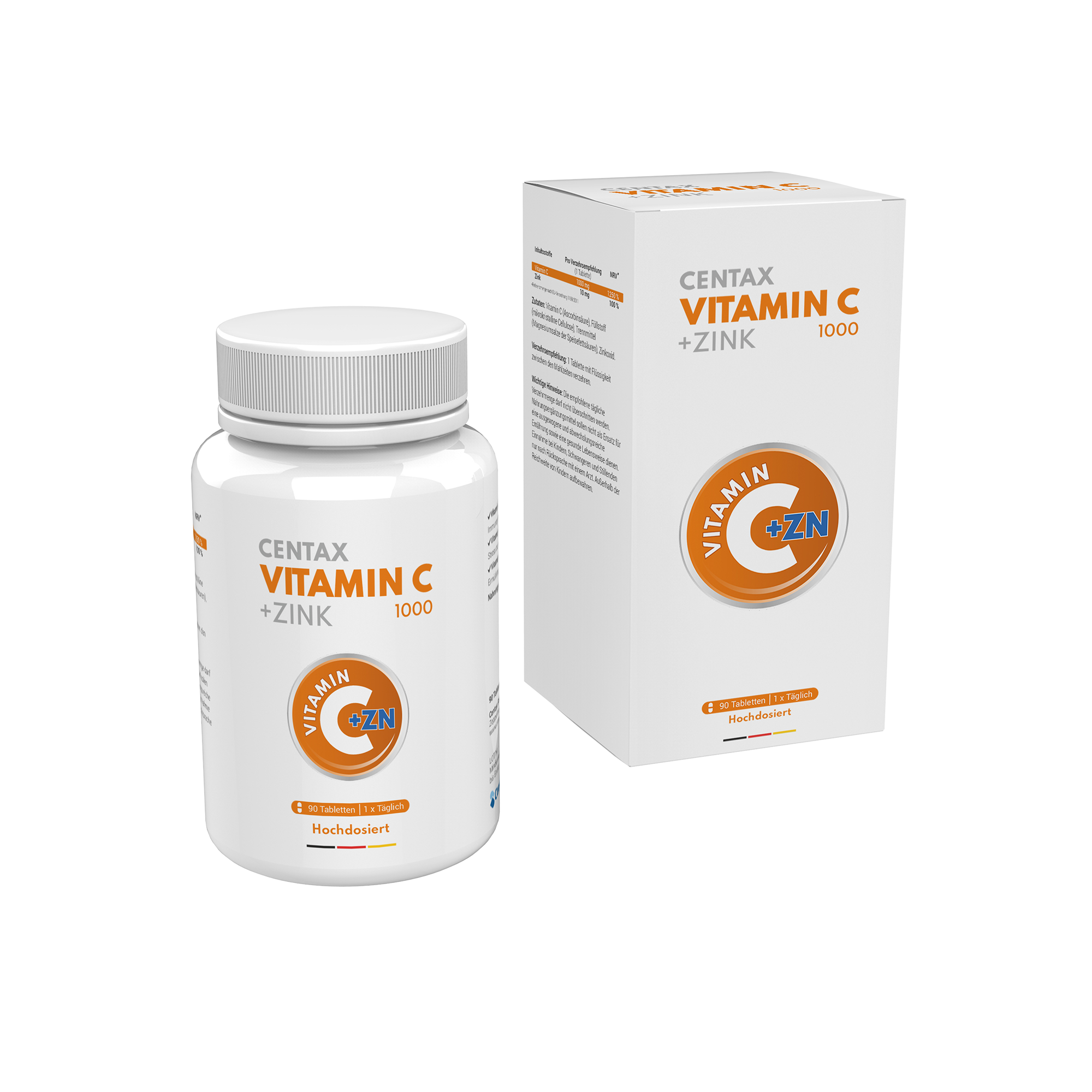
Ascorbic acid has been very well researched and is known to almost everyone. In the body it has important functions in the immune system and protects the body against oxidative stress. That is why you too should pay attention to your vitamin C intake, especially in the cold winter months, and eat plenty of fruit and vegetables. If you would like to give your diet additional support, we recommend our Centax Vitamin C + Zinc. In addition to high-quality vitamin C it also contains zinc, which gives your immune system additional support.